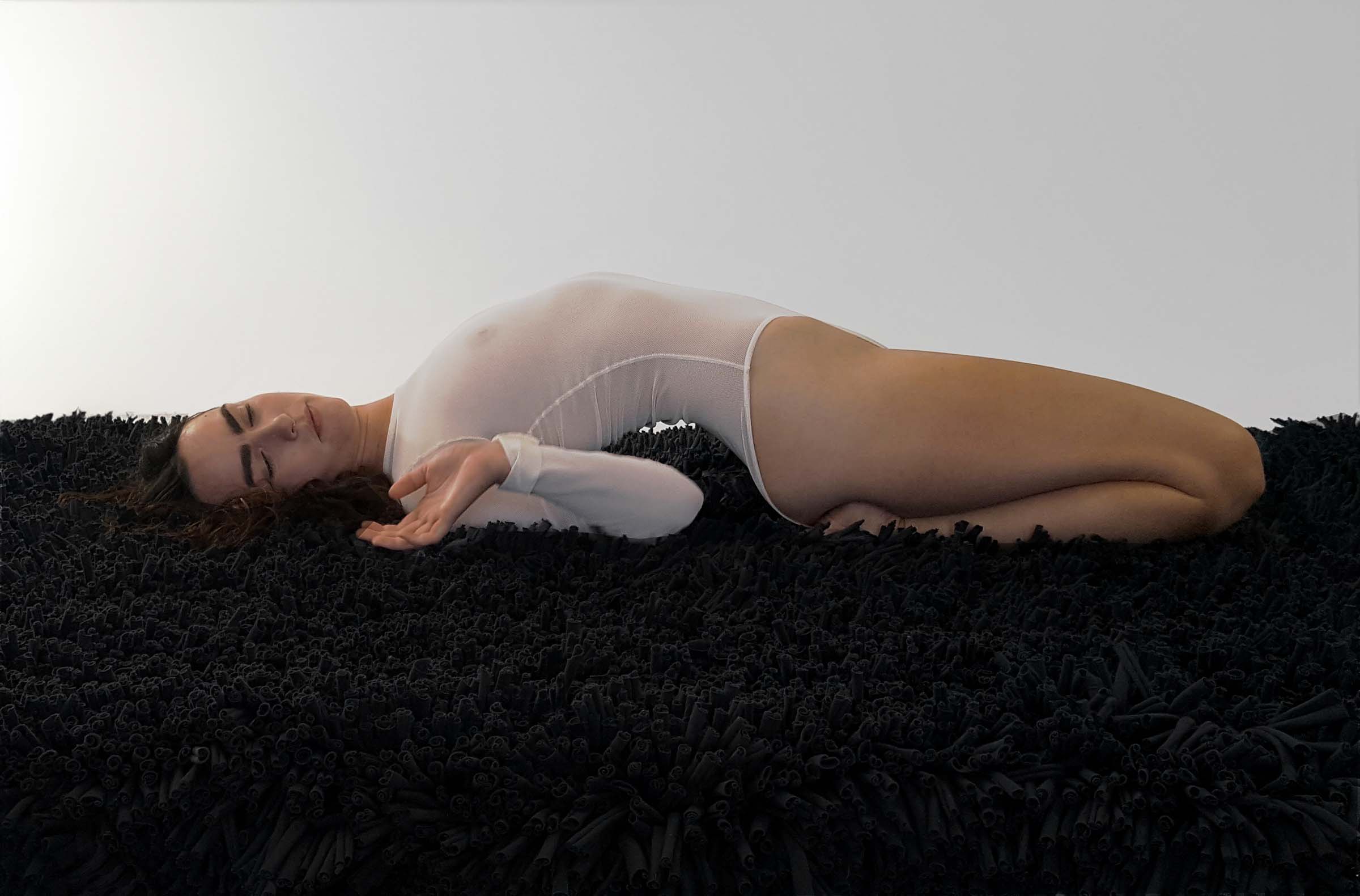
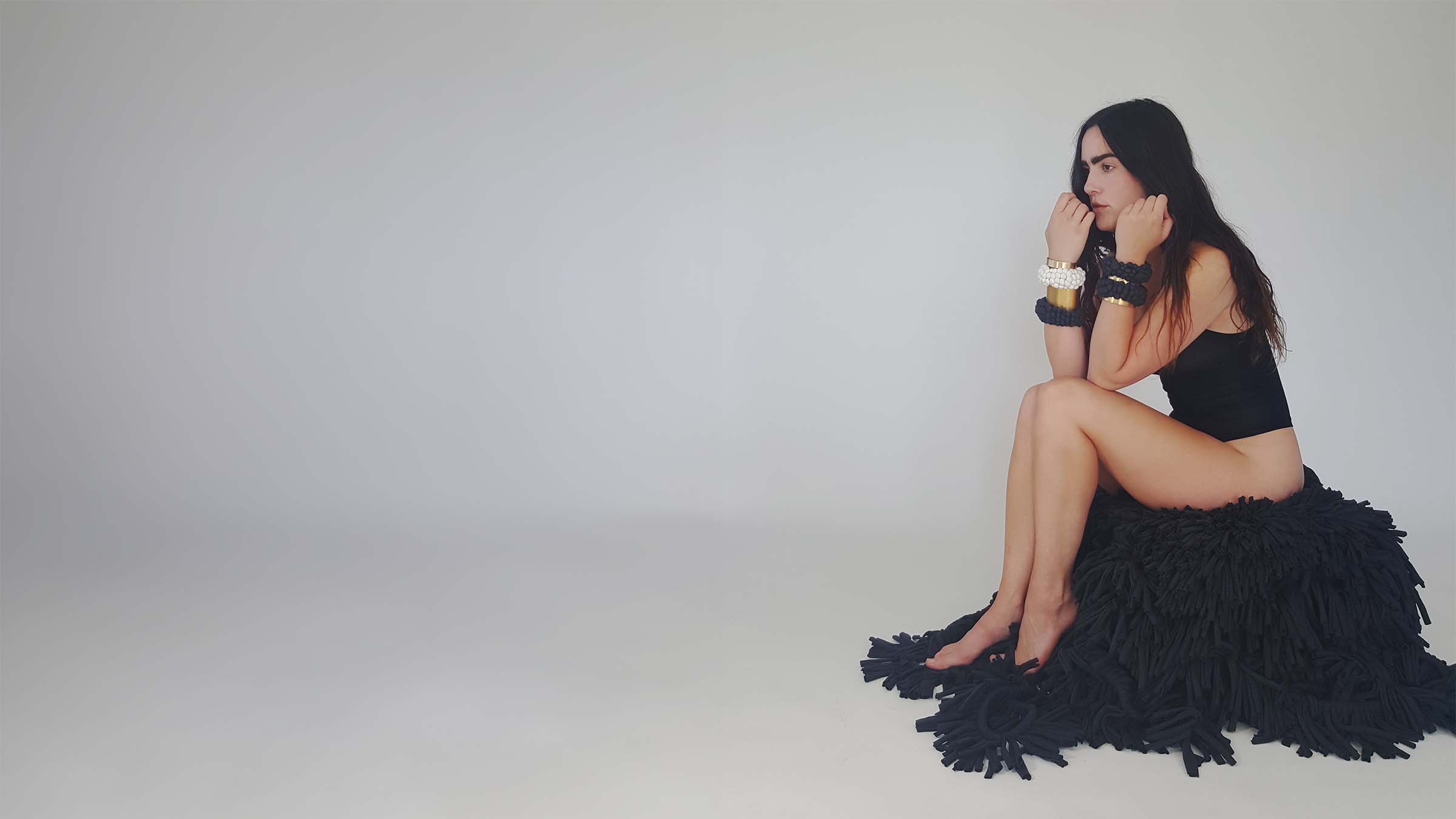
The first chapter of this collection considers the role of objects in a post-apocalyptic world. The works are conceived as speculative artifacts: functional objects for conditions in which beauty, nature and familiar forms of sensory comfort have become unstable or absent.
The pieces draw on organic pattern, repetition, softness and accumulation. They do not reproduce nature so much as reconsider how material objects might preserve or reconstruct a relationship to it.
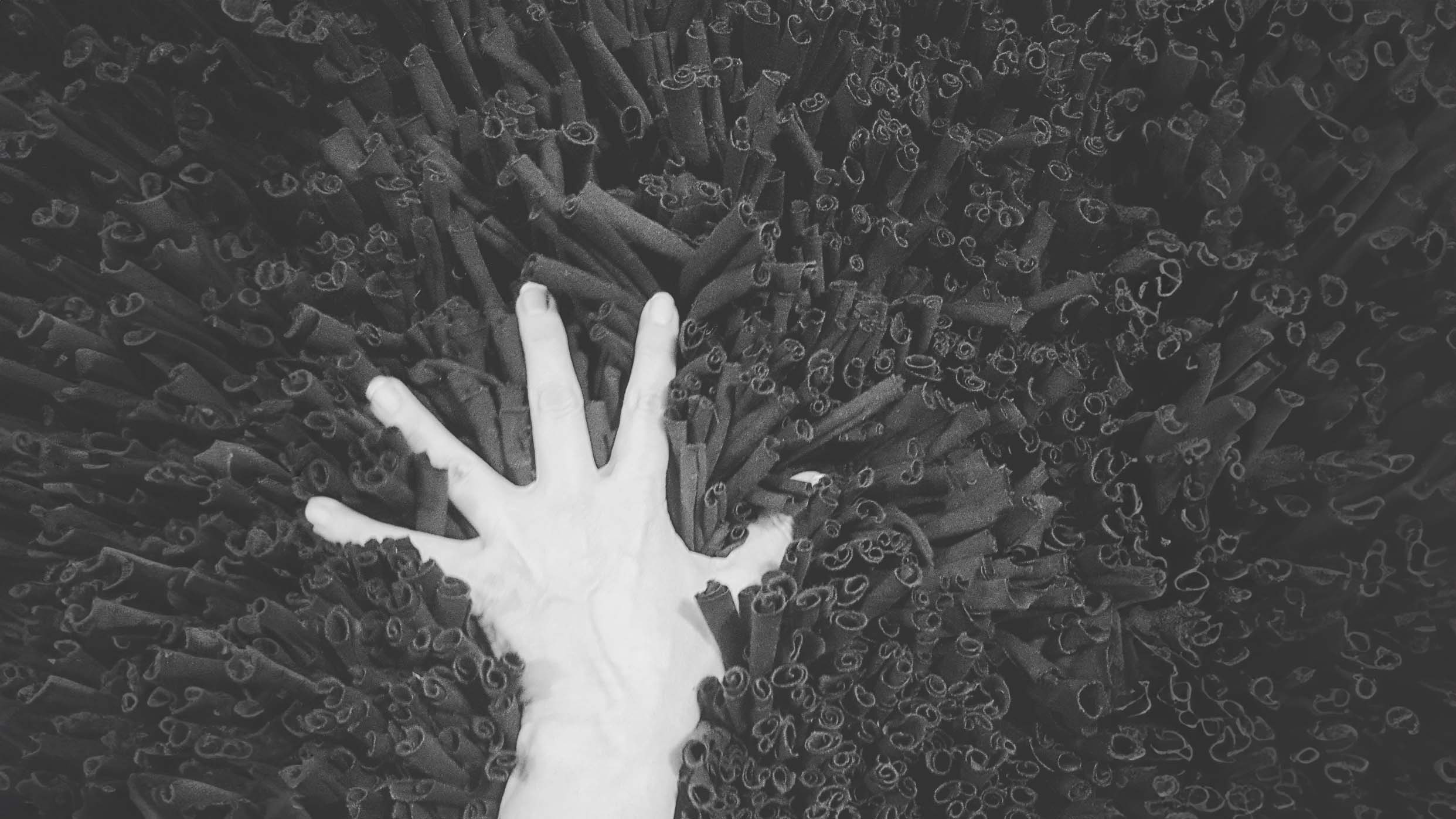
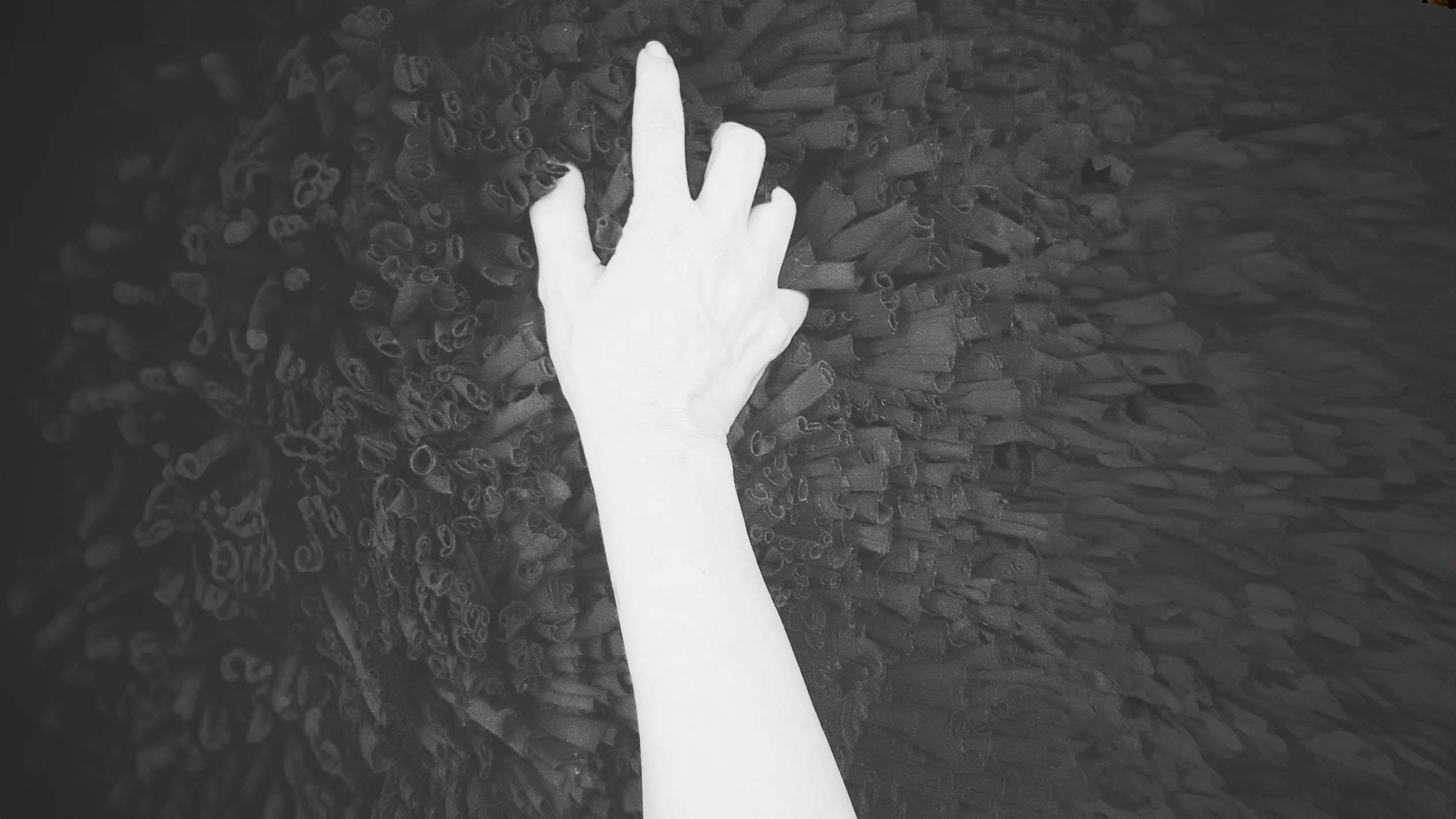
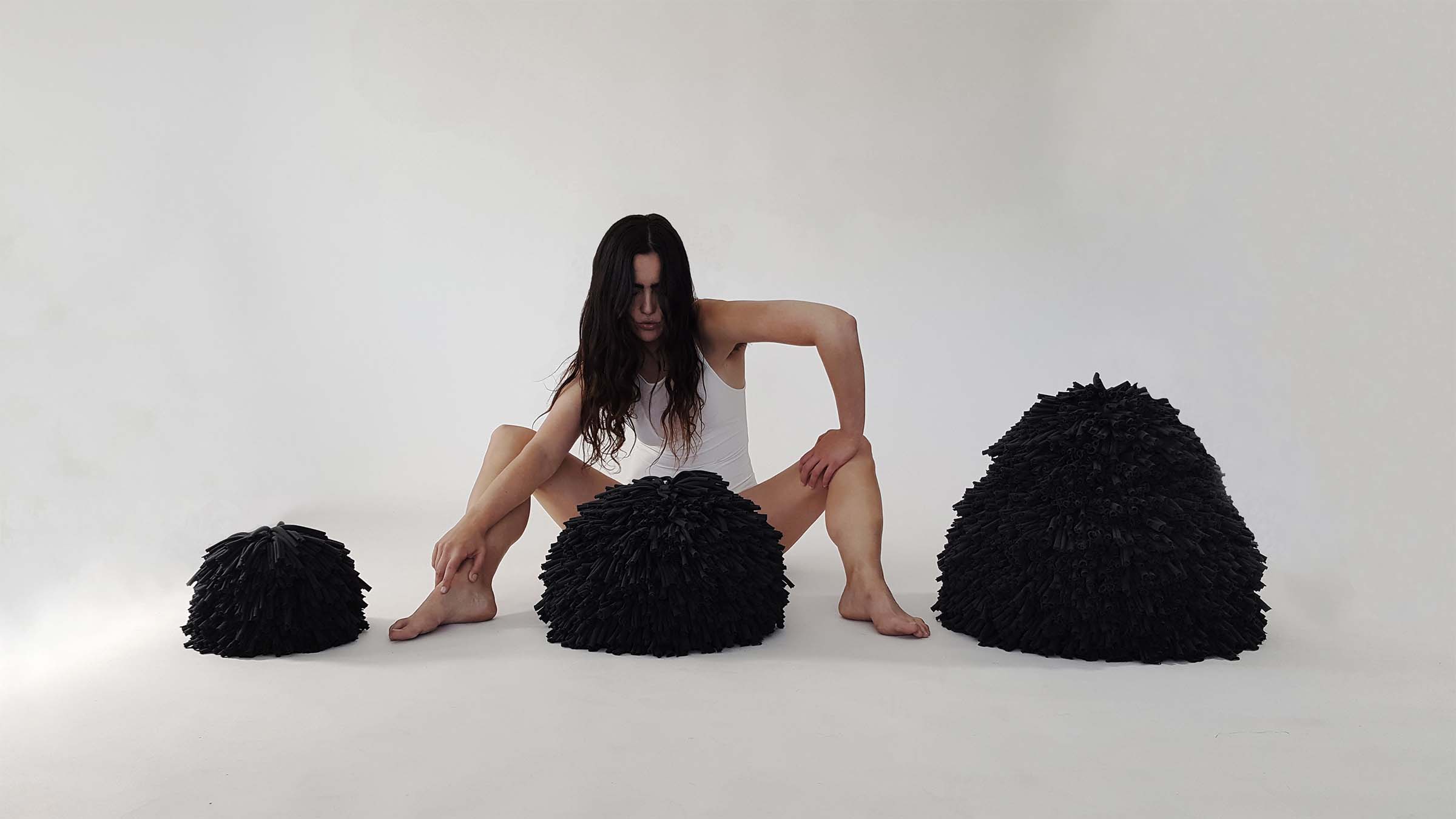
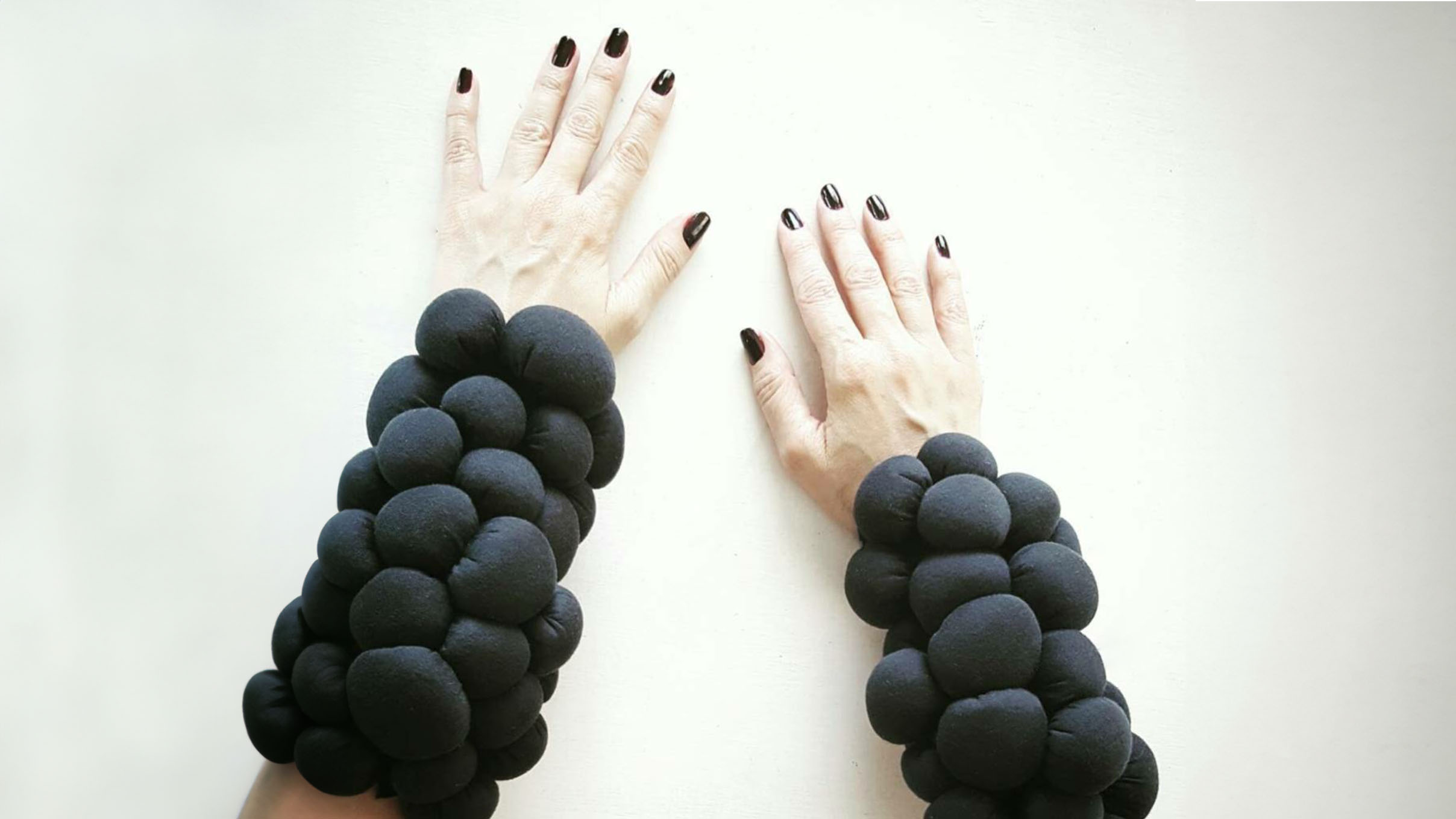
The works are made primarily from cotton jersey, with accents in brass and minerals. Tens of thousands of hand-cut pieces of fabric are tied, bound and formed into soft sculptures, wearable works and large-scale surfaces. One of the more complex pieces is a six-by-nine-foot field of anemone-like tubes made from more than 400 yards of fabric.
The fabrication process is slow, repetitive and exacting. Hundreds of hours of physical attention accumulate within each piece. The process carries its own logic of endurance, absurdity, devotion and calm.
The works occupy an unstable position between sculpture, furnishing, garment, terrain and organism. They may appear functional without resolving into ordinary use. They may read as absurd luxury, speculative infrastructure or a technology of sensory repair.
This tension is central to the collection: simplicity and complexity, utility and excess, comedy and majesty, softness and monumentality. The pieces are built through contradiction rather than in spite of it.